
When students hear the term STEM, it often sounds intimidating. Science, Technology, Engineering, and Mathematics are seen as difficult, competitive, and only meant for a certain “type” of student. As someone who has guided many students through academic decisions, I believe STEM majors are best understood not as elite or exclusive paths, but as fields built on curiosity, problem-solving, and persistence. In the United States, STEM majors form a large and diverse part of undergraduate education, offering many directions and possibilities for students with different interests and strengths.
STEM education in the USA is designed to be both rigorous and flexible. Students are encouraged to explore, experiment, and apply what they learn to real-world problems. While these majors require strong commitment, they also provide valuable skills that are useful far beyond specific job titles.
What STEM Majors Really Involve
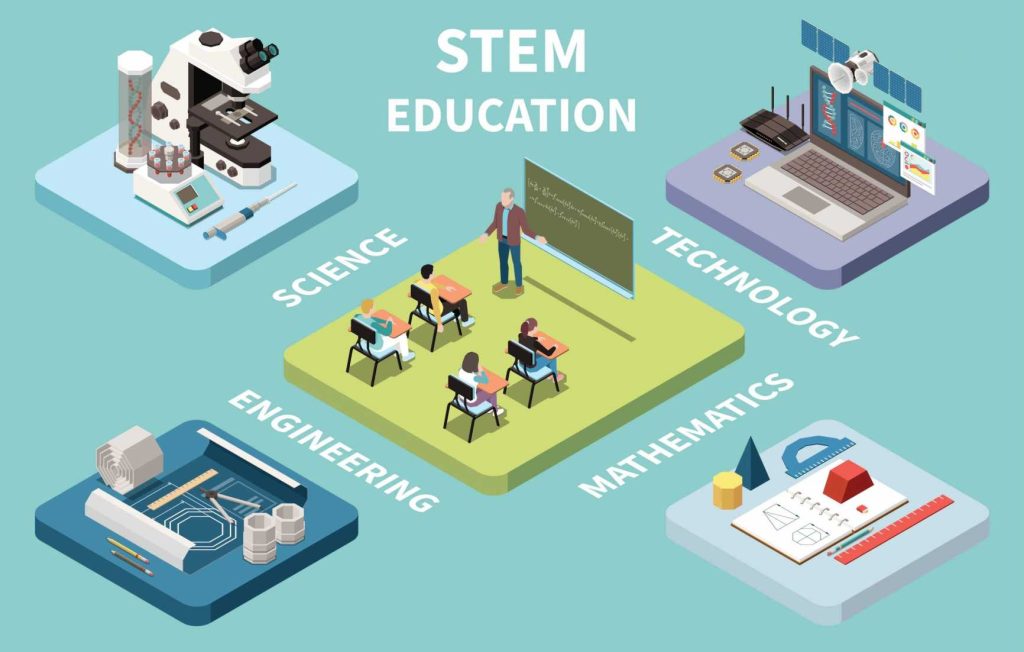
STEM majors focus on understanding how the world works and how problems can be solved using logic, data, and experimentation. Science explores natural and biological systems. Technology focuses on creating and improving tools and systems. Engineering applies scientific principles to design practical solutions. Mathematics provides the language and structure that supports all of these fields.
In US colleges, STEM majors are not limited to classrooms and textbooks. Labs, projects, simulations, and collaborative work are central to the learning experience. Students are expected to think actively, test ideas, and learn from mistakes. This hands-on approach is one of the reasons STEM programs are both challenging and rewarding.
Popular STEM Fields and How Students Choose Them
Many students enter college interested in computer science, engineering, or biology because they hear about strong job prospects. While career outcomes matter, I always encourage students to look deeper. A STEM major demands time and mental energy, so interest and motivation are essential.
Computer science attracts students who enjoy logic, coding, and building systems. Engineering appeals to those who like designing, improving, and solving practical problems. Biology and chemistry often attract students interested in health, research, or environmental issues. Mathematics suits students who enjoy abstract thinking and patterns.
In the US system, students often have time to explore these areas before committing fully. Introductory courses help students understand what the subject truly feels like, beyond high school impressions.
The Academic Experience in STEM Majors
STEM courses in the USA are structured to build knowledge step by step. Early courses focus on fundamentals, while later courses become more specialized. Students spend significant time in labs, problem-solving sessions, and group projects.
Assessment is not always about memorization. Exams often test understanding, application, and reasoning. Assignments can be time-consuming, and learning to manage workload is an important part of the experience.
Collaboration is encouraged. Although grades matter, many STEM programs emphasize teamwork, reflecting how science and technology work in the real world. Students learn how to communicate ideas clearly, accept feedback, and solve problems together.
Challenges Students Commonly Face
STEM majors are demanding, and it is normal for students to struggle at times. The pace can feel fast, especially in the first year. Some students experience self-doubt when surrounded by peers who seem confident or advanced.
I often remind students that difficulty does not mean failure. STEM learning involves trial and error. Concepts that feel impossible at first often become clear with time, practice, and support. US colleges offer tutoring centers, study groups, and office hours to help students succeed.
Learning how to ask for help is a critical skill in STEM fields and in life.
STEM Majors and Career Pathways
One reason STEM majors are popular is the wide range of career options they open. Graduates work in technology, healthcare, research, education, finance, manufacturing, and many other sectors. Some go directly into the workforce, while others pursue graduate or professional degrees.
However, a STEM major does not lock a student into a single career. The skills developed—analytical thinking, problem-solving, data analysis, and adaptability—are valuable in many roles. Employers often value how STEM students think as much as what they know.
Diversity and Inclusion in STEM
Historically, STEM fields in the USA have lacked diversity, but this is changing. Colleges are increasingly aware of the importance of inclusion and representation. Many institutions offer support programs, mentorship, and research opportunities aimed at students from underrepresented backgrounds.
For students who feel they do not “fit the stereotype” of a STEM major, it is important to know that STEM needs different perspectives. Innovation grows when people with varied experiences contribute ideas and solutions.
Is a STEM Major Right for You?
Choosing a STEM major should be based on curiosity and willingness to work through challenges, not just external pressure or perceived prestige. These majors reward persistence more than natural talent. Students who ask questions, practice regularly, and stay engaged often succeed, even if they struggle at first.
In the US education system, it is acceptable to change direction. Some students start in STEM and discover other interests. Others find their passion for STEM after exploring different subjects. Both paths are valid.
Final Thoughts
STEM majors in the USA are not just about equations, code, or experiments. They are about learning how to think critically, solve problems, and contribute to a rapidly changing world. They demand effort, patience, and resilience, but they also offer deep satisfaction and meaningful opportunities.
For students who are curious about how things work and willing to face challenges with determination, STEM majors can be a powerful and rewarding choice.