
One of the most common and quietly stressful questions students ask is, “How do I choose my major?” I hear this from confident high achievers and uncertain explorers alike. In the US education system, choosing a major is important, but it is not a life sentence. It is a direction, not a destination. Understanding this simple truth already takes away much of the pressure.
Choosing a major is less about predicting the future perfectly and more about understanding yourself, your interests, and how you learn. It is a process that unfolds over time, often through trial, reflection, and experience.
Begin with Curiosity, Not Fear
Many students approach this decision with fear. They worry about choosing the “wrong” major or disappointing their family or limiting their career options. I always encourage students to start with curiosity instead. What subjects make you lose track of time? What problems do you enjoy thinking about? What kind of conversations excite you?
In the USA, the education system is designed to support exploration. Most colleges do not require students to declare a major immediately. The first year or two often includes general education courses that expose students to different disciplines. These courses are not distractions. They are tools to help you discover what truly fits.
Understanding What a Major Really Is
A major is an academic focus, not a job title. This distinction is important. Many careers do not require a specific major, but rather a set of skills such as critical thinking, communication, analysis, or technical ability.
I have seen students with majors in history become lawyers, philosophy majors enter technology, and biology majors move into business. The US job market values adaptability. Your major shapes how you think, not just what you know.
When students understand this, they make choices with more confidence and less anxiety.
Pay Attention to How You Learn
Choosing a major is not only about what you like, but how you like to learn. Some students enjoy structured problem-solving and clear answers. Others prefer discussion, interpretation, and open-ended questions. Some thrive in labs, others in writing-intensive courses.
Reflecting on your learning style can be revealing. A subject you enjoy casually may feel very different when studied deeply. US colleges allow you to test this by taking introductory courses before committing fully.
Balance Passion with Practical Awareness
Students are often told to “follow their passion,” but passion alone is not always enough. I prefer to say: understand your passion, and then build a practical plan around it.
This means learning what people actually do with a major, what additional skills or education may be required, and how graduates build careers over time. The good news is that most majors can lead to multiple career paths when paired with internships, research, or further study.
In the US system, flexibility is a strength. You are not locked into one path if you are willing to keep learning.
Use Experience as a Guide
One of the best ways to choose a major is through experience rather than imagination. Internships, part-time jobs, volunteering, research projects, and campus activities all provide insight into what daily work feels like.
Students often discover that an interest looks very different in practice. Sometimes that realization confirms a choice. Other times, it redirects them. Both outcomes are valuable.
I encourage students to treat early college years as a time to experiment thoughtfully, not to rush decisions.
Talk to People, Not Just Websites
While online research is helpful, conversations are often more powerful. Talking to professors, academic advisors, career counselors, and older students can provide perspective that websites cannot.
These conversations help students understand expectations, workload, and opportunities within a major. They also reveal paths that students may not have considered.
Choosing a major should not be a lonely decision. In the US college environment, support systems exist for a reason.
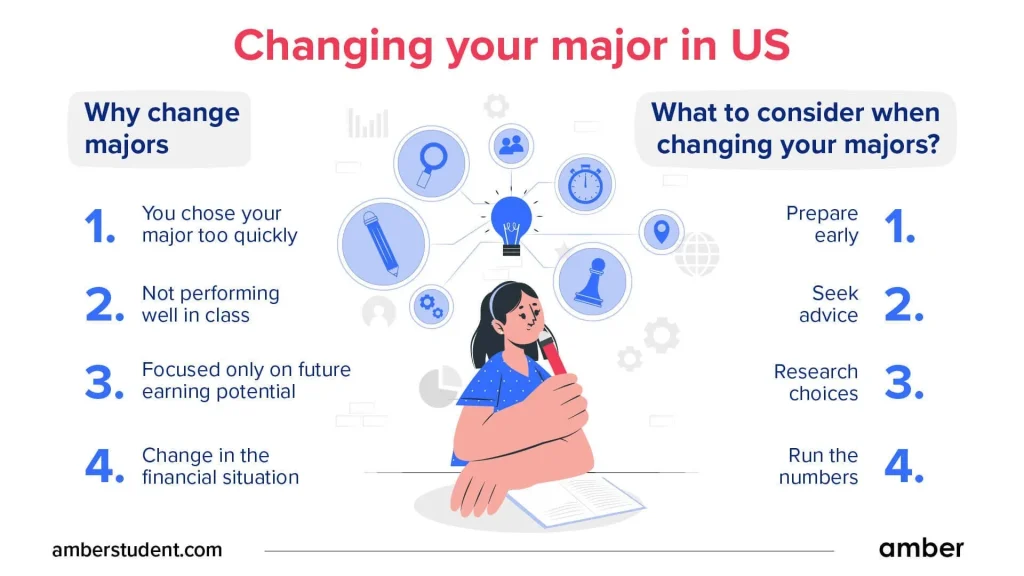
Changing Your Major Is Not Failure
Many students worry that changing a major means they have failed. In reality, changing a major often means you have learned something important about yourself. US colleges are built with this flexibility in mind.
I have counseled students who changed majors and became more confident, engaged, and successful afterward. What matters is reflection, not perfection.
The ability to reassess and adapt is a strength, not a weakness.
Cultural and Family Expectations
For some students, especially those from international or traditional backgrounds, choosing a major carries family expectations. These expectations come from love and concern, but they can add pressure.
I encourage open and respectful conversations with family members. Explain what you are learning, what options exist, and how you plan to build a stable future. Often, understanding reduces fear on all sides.
Education works best when students feel supported, not trapped.
Trust the Process
Choosing a major is a journey that continues even after the declaration form is signed. Interests evolve. Skills grow. New opportunities appear.
In the US system, your education is not meant to narrow you too early. It is meant to help you discover who you are and how you want to contribute to the world.
Final Thoughts
From a guiding perspective, the best major is one that challenges you, engages you, and helps you grow—academically and personally. It should align with your interests today, while leaving room for the person you will become tomorrow.
Choosing a major is not about having all the answers. It is about asking the right questions and being willing to learn from the answers over time.